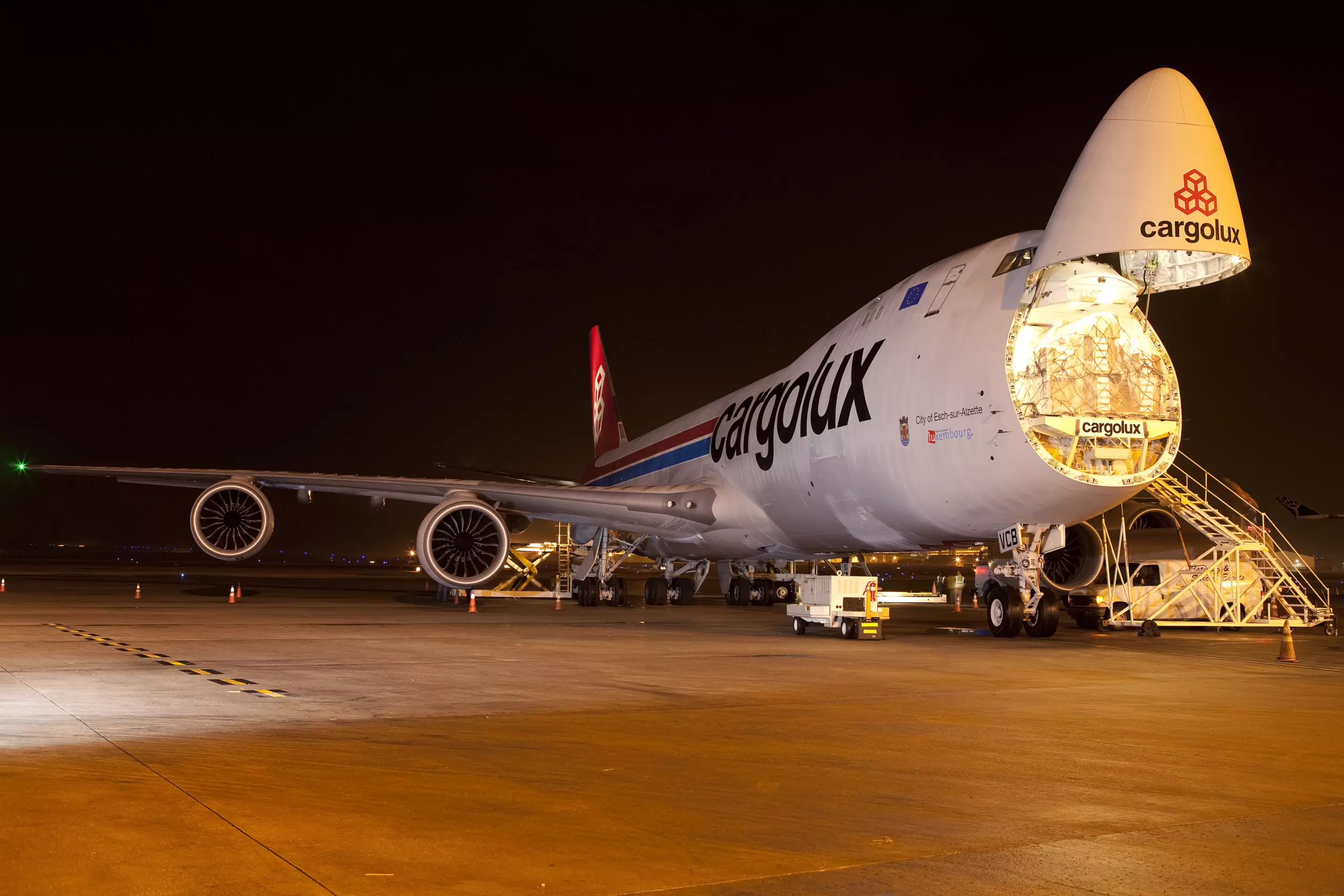
A landlocked city of 225,000 people in north Alabama has no business ranking 21st in the continental United States for international air cargo volume. And yet Huntsville does — and the gap between Huntsville and the cities below it on that list is widening, not closing.
In February 2026, Huntsville International Airport moved 6.9 million pounds of air cargo in a single month. That’s a 43 percent increase year-over-year. Year-to-date freight is up 39.6 percent. The global air cargo industry is growing at 2.4 percent. Huntsville is outpacing the world by a factor of sixteen.
Those aren’t vanity metrics. They’re showing up in warehouse occupancy, carrier demand, and lane pricing across the Tennessee Valley. If you’re a shipper, a carrier, or a 3PL operating anywhere between Nashville and Birmingham, this is the freight story you should be paying attention to — because it’s reshaping the logistics math for the entire region.
The Port Nobody Expects
Most people hear “Port of Huntsville” and do a double-take. Alabama is not exactly known for its deepwater berths. But the Port of Huntsville isn’t a seaport — it’s a multimodal inland hub that integrates air cargo, rail intermodal, and highway freight into a single complex anchored at Huntsville International Airport.
The infrastructure backing it up is substantial. The air side operates 436,000 square feet of cargo warehouse and distribution space, including 35,000 square feet of cold storage. Seven major cargo airlines operate scheduled service, alongside international freight forwarders DSV and Kerry Logistics. The Port has invested over $230 million in air cargo infrastructure and more than $70 million in rail intermodal facilities.
On the rail side, the International Intermodal Center posted a 22.3 percent increase in lifts during 2024 — 33,745 versus 27,597 the year before. In March 2025, the facility crossed a historic milestone: one million lifetime lifts. Norfolk Southern provides the Class I rail connection, tying Huntsville into the eastern U.S. intermodal network.
For a city its size, the concentration of multimodal freight infrastructure is wildly disproportionate. That’s not an accident. It’s the result of decades of defense-driven investment — and what’s happening right now is the commercial logistics sector catching up to what the defense community already knew.
What’s Actually Driving the Volume
Huntsville’s cargo surge isn’t random. It’s being pulled by three forces that are all accelerating simultaneously.
The defense and aerospace corridor is expanding. Redstone Arsenal already hosts the U.S. Army Materiel Command, the Missile Defense Agency, Army Space and Missile Defense Command, and NASA’s Marshall Space Flight Center. Boeing, Lockheed Martin, Raytheon, and Northrop Grumman all maintain major operations in Huntsville. In April 2026, the U.S. Space Command Intelligence Directorate began operations at Redstone — the first wave of a relocation that will bring 1,400 jobs over the next five years. Every one of those missions generates freight: components, test equipment, classified materials, and the specialized packaging and chain-of-custody logistics that go with them.
GE Aerospace announced a $55 million investment in its Huntsville facility to expand production of advanced silicon carbide fiber and pre-preg tape — materials used in next-generation aircraft engines that are one-third the weight of traditional metals and can withstand temperatures 500 degrees hotter. That’s the kind of high-value, precision-logistics freight that drives air cargo volume and requires handling capabilities most warehouses don’t have.
Automotive manufacturing is at full capacity. Mazda Toyota Manufacturing’s $2.3 billion plant in Madison is producing 300,000 vehicles per year with 4,000 employees. The supplier ecosystem around it accounts for another $725 million in investment and 2,000 additional jobs across the region. That’s not just finished vehicles — it’s a constant inbound flow of components, subassemblies, and raw materials on JIT schedules, plus outbound parts distribution that feeds into the intermodal network.
The cargo airlines keep adding capacity. Seven major cargo carriers now operate at Huntsville International, and the airport’s role as a tech-stop and fuel-stop for transpacific cargo flights gives it organic volume that most midsize airports never see. The combination of long runways, 24-hour operations, low congestion, and proximity to the I-65 corridor makes Huntsville structurally attractive to cargo operators looking for alternatives to congested gateway airports.
What It Means for Shippers and 3PLs
The growth curve Huntsville is on creates real operational implications — some of them opportunities, some of them pressure points.
Warehouse capacity is getting absorbed fast. The Port’s 436,000 square feet of cargo warehouse space was sized for a different volume profile. With cargo up 43 percent and defense contract logistics expanding, available space in and around the airport complex is tightening. If you need climate-controlled or security-cleared warehouse space in the Huntsville metro, the window to lock it in is narrowing.
Intermodal is becoming a real alternative for regional distribution. The IIC’s growth isn’t just a Huntsville story — it’s a signal that shippers in the Tennessee Valley are discovering that rail-truck intermodal through Huntsville can compete with over-the-road on lanes to Atlanta, Memphis, Nashville, and the Gulf Coast. If you’ve been running those lanes pure truckload without modeling the intermodal option, you’re likely overpaying.
Defense logistics is a specialized game with high barriers to entry. The Space Command relocation and GE Aerospace expansion are going to generate demand for 3PLs with ITAR compliance, classified materials handling, and audit-ready chain-of-custody documentation. The operators who already have those certifications in the Huntsville market are going to see premium pricing power. If you’re considering entering the defense logistics space, the certification and clearance timeline starts now — not when the contracts hit.
The labor market is getting competitive. Between Mazda-Toyota’s 4,000 employees, the defense contractor workforce, and the logistics operations serving both, Huntsville’s labor pool for warehouse and transportation workers is under real pressure. Wages are moving. If you’re operating on thin labor margins, plan accordingly.
What to Actually Do About It
If Huntsville touches your freight network — or if it should — here’s the playbook:
Model Huntsville as an intermodal origin or destination. Run the math on rail-truck through the IIC versus pure truckload for your southeast lanes. The infrastructure and service frequency are there now. Many shippers haven’t priced it because Huntsville wasn’t on their intermodal radar — but the economics may surprise you.
Secure warehouse capacity before the next defense contract wave. Space Command is just the beginning. Every new defense program at Redstone generates downstream logistics requirements. If you wait until the RFPs drop, the warehouse space will already be committed.
Evaluate Huntsville International for air cargo routing. If you’re shipping high-value, time-sensitive freight into or out of the southeast U.S. and you’re defaulting to Atlanta or Memphis, Huntsville is worth quoting. Lower congestion, competitive handling rates, and direct cargo carrier service make it a viable alternative — especially for defense, aerospace, and automotive components.
Get ahead of the labor curve. Invest in retention and training now. The operators who build stable warehouse and transportation teams in Huntsville today will have a structural advantage over those trying to hire into a tight market in 2027 and beyond.
Bottom Line
Huntsville’s cargo boom isn’t a blip. It’s the compounding effect of decades of defense investment finally intersecting with commercial logistics infrastructure that’s been quietly built to handle it. Air cargo up 43 percent. Rail intermodal posting consecutive record years. Space Command arriving. GE Aerospace expanding. And a $2.3 billion auto plant running at capacity.
The shippers and 3PLs who recognize what Huntsville is becoming — not what it was five years ago — are going to position themselves in one of the fastest-growing freight markets in the southeastern United States.
If you want help building a Huntsville logistics strategy, the contact form is at the bottom of every page on this site. This is the market we know best.